How To Plan And Progress Pro-Level Football Training Sessions
Free Joner Football Hub
Want more free training ideas?
Enter the Hub for free blogs, challenges, coach resources, giveaways and weekly Joner Football ideas.
Enter The Free HubA serious training session is not a random pile of football drills.
The drill matters, but the plan around it matters more. What are you trying to improve? How will you make it harder? What will you watch for? When will you move on?
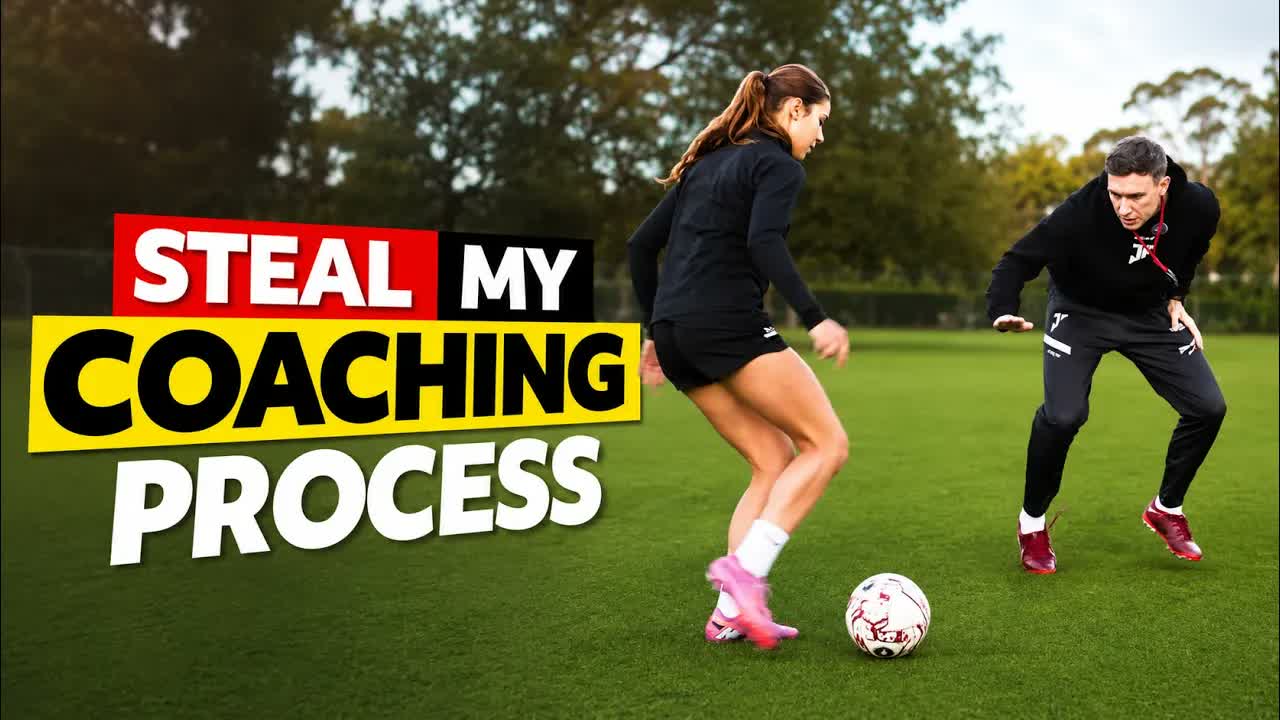
That is how I coach professional players in the How I Coach Pros series. I am not just collecting exercises. I am building a block of work, then showing how the detail changes as the players learn, adapt and start to solve the problem faster.
The latest video is a montage of coaching moments from that process. It includes passing, scanning, body shape, pressure, finishing from crosses and the small corrections that change the quality of a session. The value is seeing how the session is planned, progressed and reviewed.
Start with a clear training problem
Before you put cones down, decide what the players need to get better at.
In the video, I talk about the questions I get inside the app: how to plan for professionals, how to plan in blocks of 10 or for the season, and how to structure and progress sessions.
Those questions all point to the same thing. A session needs a purpose.
You might be working on receiving under pressure, scanning before the ball arrives, finishing from a cross or the first action after losing the ball. Whatever the problem is, make it visible in the practice.
That stops training becoming a list of activities. It gives the player something to solve.
Build the first layer with detail
One of the early practices in the video is a simple passing move. The players move off a cone, check their shoulder, receive, set the ball and move to the spare cone.
On paper, that sounds basic. It is basic. That is why the details matter.
I am watching the movement before the pass. I am watching whether the player scans. I am watching the body shape and which foot they choose. I am watching whether they move again after playing the ball.
A simple exercise can still look like high-level football if the players perform it with the right habits. The practice is not successful because the ball travels from one player to another. It is successful when the player prepares to receive, sees the next picture and plays with the right body position.
In the video I say, "Moving, scanning, body shape. What foot are we playing it to?" That is the coaching lens. The drill is only the surface. The habits underneath are the actual training content.
For players, review your own work. Did you scan early? Did your first touch help the next action? Was your body open enough to play forwards?
Keep the work short, sharp and active
A professional session does not need one exercise to run for an hour.
During the passing practice, I say, "I'm not going to let it go for an hour. Short, sharp, but I want the ball moving." That is a useful rule for coaches planning a session. If the activity has done its job, progress it. If the intensity is dropping, change the problem. If the players are repeating a pattern without thinking, add a decision.
The next layer asks the players to scan left and right while moving across the box, then adds a change of direction. The same passing habits remain, but the players now have to process more information.
Progress by adding pressure and decisions
The next practice adds a defender and a gate. The player comes short, plays a bounce pass, then sprints through the gate before trying to tackle. There are different routes around an obstruction, so the player has to work hard and choose quickly.
That is a better progression than simply making the drill bigger or adding more cones. The player now has a reason to move, a time limit created by the defender and a decision to make after the pass.
The coaching detail stays specific. I ask for the passing quality. I tell the player to check their shoulders. I correct the receiving position. I explain that once the player is through the gate, they can tackle straight away. I am not giving a speech after every repetition. I am changing the detail that affects the next action.
One of the players is told to come a little higher to receive, then to drop slightly. Another player is told they do not need to get all the way around the pole. As soon as they are through the gate, they can tackle.
Those are small adjustments, but they change the timing of the practice. Good coaching often looks like that. The coach sees the next problem and gives the player one clear correction that they can use immediately.
Review the quality, not just the result
At one point I stop and say the practice is a bit sloppy. I tell the players that the second pass needs to be sharper and that the touch has to test each other. I ask them to think about their body shape, balance and scanning rather than waiting for me to coach every mistake.
That is the review stage of a session.
Review does not mean telling players whether the drill looked good. It means asking whether the practice produced the behaviour you wanted. If the players completed the pattern but received square, played soft passes and stopped scanning, the practice has not finished its job.
I also challenge the players to have a skill in mind before the bounce pass. They need to think one step ahead of the defender. Later, I describe the quality as around three or four out of 10 and ask them to find that half a yard and get back to the level from the previous week.
That language is direct, but the purpose is positive. The players need a standard they can chase. A session should give them feedback they can act on, not just praise for turning up.
Add a consistent finishing theme
Later in the video, the focus moves to scoring from crosses. I explain that attackers should work on this almost every day. The session includes crosses from wide areas, cutbacks and balls along the ground.
The important point is the consistent theme. The delivery changes, but the players keep working on finishing actions that appear in matches. The ball can come hard, in the air, towards the back post, towards the front post or along the ground. The finish still needs a clear body shape and a decisive action.
You can hear the coaching in the practice. "Body shape open." "Get that bounce pass." "Where's the corners?" Those cues are short because the players are already in the action. The feedback connects to what just happened.
The session then becomes more reactive. I ask the players to mix up their crossing, play it hard, use the air, and vary the front and back post. The players need to work in sync. If they are out of sync, they will not create many shots in the second part.
That is how a session moves from a known pattern towards a more match-like problem. The theme stays the same, but the players cannot simply wait for the same ball every time.
Give players a problem to solve
The video also includes a smaller finishing practice where the player uses a fake shot, shifts the ball and then finishes. The move is simple. The player does not need anything crazy. They need to shift the defender and choose whether the next action is a shot or a fake shot.
That is a useful reminder for players who overcomplicate their training. You do not always need a new trick. You need to create a small advantage, then finish the action.
For coaches, the practice offers a clear review question. Did the player shift the defender before finishing? Did the touch create enough space? Did the player stay patient and find the half-yard? Those questions are more useful than asking whether the drill looked exciting.
Turn the session into a repeatable system
The first episode of this series is free, including the PDF session plan. The full training sessions and PDF plans continue inside the app, with a new episode each week in the Max Plan.
That matters because a player or coach can see the difference between one interesting session and a structured block of work. You can plan the theme, build the first layer, add pressure, review the detail and then carry the learning into the next session.
That is what serious development needs. A clear problem. A progression. A standard. A review.
If you want to watch the montage and see the coaching moments for yourself, watch the full video here: Loads of Soccer Drill Ideas for PRO PLAYERS.
If you want to start with the first free episode and the PDF session plan, use the free episode link.
Do not copy a drill because it looks professional. Ask what the drill is trying to teach, how you will make it harder and what you will review after the final repetition. That is where the levels come from.
Keep improving
Choose your next training step.
Use the guides below to move from reading into proper Joner Football training.
Get The Free Hub
Drop your email once and get free Joner Football blogs, challenges and coaching resources.
Enter The Free HubTake Your Training Further
For 1,500+ drills like these, join the Joner Football App.